All About Fiber

When you think about adding fiber to your diet, do you automatically think of grains and wheat? Dietary fiber is a type of carbohydrate found in fruits, vegetables, legumes and whole grains.
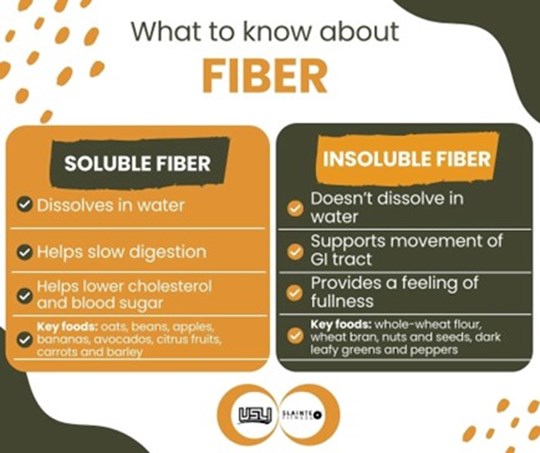
There are two types of fiber — soluble and insoluble — and both are important for overall health. Most high-fiber foods contain a mix of both types, so eating a variety of foods helps ensure you get enough of each.
See below for more information about the two types of fiber, their benefits and examples of food sources for each:
How much fiber do you need?
Women should aim for 21–25 grams of fiber per day, while men should aim for 30–38 grams daily.
Examples of high-fiber foods include:
- Beans: 1 cup = 15 grams
- Avocado: 1 cup = 10 grams
- Leafy greens: 1 cup = 7 grams
- Berries: 1 cup = 8 grams
- Oats: 1 cup = 5 grams
Adding fiber to your diet supports digestive health and may reduce the risk of conditions such as diabetes, heart disease and gastrointestinal cancers. Additional benefits include:
- Supports digestive health and helps prevent constipation
- Helps lower cholesterol levels
- Soluble fiber in foods such as oats, beans and flaxseed can reduce the absorption of LDL (“bad”) cholesterol
- May help lower blood pressure and reduce inflammation
- Supports weight management by helping you feel fuller longer, which may reduce snacking or overeating
Easy ways to add more fiber to your diet
- Choose a high-fiber breakfast
- Include whole grains and fruit
- Options may include chia pudding, avocado toast with eggs, oatmeal or a high-fiber smoothie
- Choose whole grains over refined grains
- When baking, try whole-grain flour, oats or wheat bran
- Choose whole-wheat or whole-grain bread instead of white bread
- Add legumes to your weekly meals
- Lentils, black beans, pinto beans and chickpeas are excellent sources of fiber
- Include more fruits and vegetables
- Fresh, frozen or canned options can all work
- If choosing canned fruit, select options packed in 100% fruit juice and low-sodium vegetables or rinse them before eating
- When possible, leave the skin on fruits and vegetables, as much of the fiber is found there
- Make your snacks fiber-rich
- Choose less processed snacks and replace them with whole-food options
- High-fiber snacks include fruit with nut butter, berries with seeds, vegetables with dip, nuts and seeds or yogurt topped with chia seeds or berries
Embrace these tips and start incorporating more high-fiber foods into your diet. Your gut — and overall health — will thank you.

About the author
Ms. Alexandra Bollinger is a Health and Wellness Coach on the Slainte Fitness team at USLI. She enjoys staying active by strength training and going for daily walks and runs. Ms. Bollinger also enjoys working one-on-one with community members and customers to ensure they are on the right track to living a healthy lifestyle!