The Misunderstood Link Between Stress and Inflammation

When you think about inflammation, your first thought may be swelling after an injury. However, inflammation occurs throughout the body any time it is trying to heal from injury or illness. Inflammation is vital and is the body’s natural healing response.
While inflammation is necessary for recovery, there are two types: acute and chronic. Acute inflammation is sudden and temporary, typically lasting a few hours or days. Chronic inflammation, however, can last for months or even years and may begin to affect multiple systems throughout the body. See the graphic below for common causes and symptoms of inflammation.
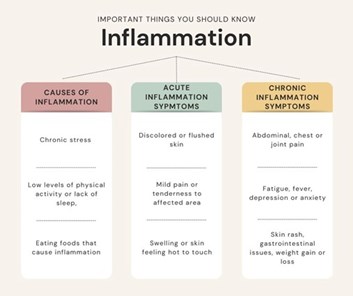 |
One common, and often misunderstood, cause of inflammation is chronic stress. During periods of ongoing stress, cortisol levels remain elevated. Over time, this can weaken the immune system and increase inflammation throughout the body. Chronic stress may contribute to symptoms such as fever, high blood pressure, metabolic syndrome, joint and cartilage damage and skin issues. Elevated cortisol levels can also interfere with the body’s ability to respond appropriately to injury or illness, reducing its natural anti-inflammatory control.
Managing stress is essential to reducing inflammation and preventing it from becoming chronic. Small, consistent lifestyle changes can make a meaningful difference.
Tips to help reduce stress and inflammation include:
- Add anti-inflammatory foods to your diet, such as salmon, fresh fruit, leafy greens and spices like turmeric, ginger and garlic
- Aim for at least 150 minutes of moderate-intensity exercise each week
- Cardio: walking, biking, running, swimming or cardio-based classes
- Strength training: weightlifting or strength-focused classes
- Fuel your body with fresh, minimally processed foods and limit caffeine intake
- Prioritize sleep, aiming for seven to eight hours each night
- Practice mindfulness regularly through meditation, yoga or breathing exercises
- Stay connected by spending time with friends or engaging in hobbies
- Rest injured areas to allow proper healing
Maintaining healthy stress and cortisol levels is important not only for reducing inflammation but also for overall well-being. When cortisol and inflammation remain elevated for extended periods, they can affect nearly every system in the body. Recognizing early signs and taking proactive steps can help prevent more serious health concerns over time.

About the author
Ms. Alexandra Bollinger is a Health and Wellness Coach on the Slainte Fitness team at USLI. She enjoys staying active by strength training and going for daily walks and runs. Ms. Bollinger also enjoys working one-on-one with community members and customers to ensure they are on the right track to living a healthy lifestyle!