Movement in 3D

In today’s environment it’s easy to spend long hours sitting, staring at screens and moving very little throughout the day. Exercise programs often focus on simple repetitive exercises like walking, cycling or basic strength training that mostly happen in one direction. While these activities are valuable, they don’t fully prepare the body for the real-world demands of work and life. Incorporating movements in 3D into your warmups and workouts helps support these demands. Moving in 3D means training the body to move through all three planes of motion:
- Sagittal plane: forward and backward movements (walking, squatting, lunging)
- Frontal plane: side-to-side movements (lateral lunges, side steps)
- Transverse plane: rotational movements (twisting, reaching across the body)
In everyday life we constantly use all three planes — turning to grab a bag, stepping sideways to avoid someone or rotating to reach for something on a desk. Ignoring these movement patterns leaves the body underprepared and vulnerable to discomfort and injury.
Movement in 3D helps reduce the risk of injury, improves posture, enhances functional strength and boosts energy and focus. Repetitive, one-directional movement and prolonged sitting can create muscle imbalances and joint stiffness. Training in all three planes improves joint stability, mobility and coordination and helps you move more safely both at work and outside the office.
Rotational and side-to-side exercises counteract the effects of sitting and screen use by activating underused muscles and restoring natural movement patterns. Real-life strength isn’t just about lifting heavier weights; it’s about controlling your body in space. 3D movement builds functional strength that transfers directly to daily tasks like carrying loads, climbing stairs or traveling for work.
Dynamic, multi-directional movement challenges the brain as well as the body. This can improve coordination, increase blood flow and leave employees feeling more energized and mentally sharp — an important benefit in high-demand corporate roles.
3D movement is most effective when it’s done with purpose. Moving with purpose means being intentional about how and why you move rather than just “going through the motions.” Purposeful movement includes:
- Awareness of posture, balance and breathing
- Control through full ranges of motion
- Intent behind each exercise, connecting it to real-life activities
Two examples of simple ways to integrate 3D movement into your everyday life which don’t require complex equipment include:
- Take short movement breaks that include twisting, reaching and side stepping
- Take a group exercise class, in person or virtually, that focuses on mobility, balance and rotational strength
These approaches don’t require complex equipment and can be adapted for all fitness levels.
The human body was designed to move in three dimensions, not just forward and backward or from chair to chair. By prioritizing 3D movement and moving with intention, we develop strength, resilience and coordination that translate to everyday life. Moving in 3D isn’t about doing more; it’s about moving better, with purpose and awareness.
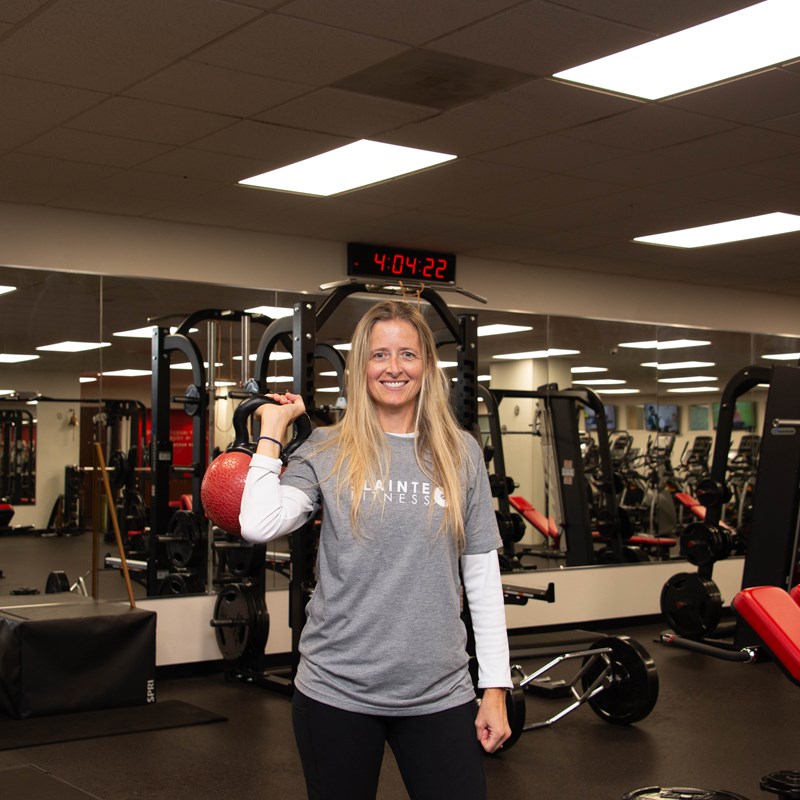
About the author
Kelly Fisher
Mrs. Kelly Fisher is a part-time Fitness and Wellness Coach in Slainte Fitness Center at USLI. Mrs. Fisher has trained a variety of sports teams ranging from college to youth level. She is a sports enthusiast, tennis novice and spends her weekends traveling to her kids' multiple sporting events.